Machine
ABSTRACT:
The unpredictable shear cutting machine can be moved anyplace close to the action and can be fitted at work. This kills the danger of conveying the activity to the machine table. This unit is driven by 0.25 H.P. single stage engine of 1440 rpm. This empowers the slide to get the responding movement having a stroke length of 75mm. The leader of the opening can be tilted to any coveted point. The head is welded to the slider at the base edge.
The finish of the base edge moving shaper is appended to the reasonable plan. The settled shaper is settled to outline stand. This machine can likewise be utilised for generation of little sheet cutting materials.
PRESENTATION:
The unpredictable shear slicing machine can be utilised to cut the sheet easily. The offbeat drive component has a high mechanical preferred standpoint close to the base of the stroke.
WORKING PRINCIPLE:
The unpredictable cutting machine is furnished with a “V” pulley driving paces. This pulley is associated with the engine by a ‘V’ belt. At the point when the engine is begun, the principle shaft of the slotter additionally begins spinning at a similar speed. The running rate is 1440 R.P.M. The principle shaft drives the even shaft.
The speed is additionally diminished in the proportion of 1: 10. The bearing of revolution likewise changed. At the point when the principle shaft pivots 10 times the even shaft will turn just once. The machine empowers us to get 10 strokes/minute. The cam is keyed to the even shaft. The cam is comprised of the solid metal piece e. The connection is associated with the cam stud. The stud is settled at 75 mm from the middle. The finish of the base stud moving shaper is settled. The settled shaper is settled to the casting stand. The engine will turn the cutting machine cut the sheet consistently.
APPLICATIONS:
This machine is exceptionally helpful for little scale ventures
This machine is utilised to cut the rolled sheet metal.
All Industrial Application
DISADVANTAGES:
The high torque cannot be gotten
Only this machine cut the little sheet metal
ADVANTAGES:
Quick reaction is accomplished
Simple in development
Easy to keep up and repair
Cost of the unit is less when contrasted with other machines
No fire danger issue due to over stacking
Comparatively, the task cost is less
A continuous task is conceivable without halting
Portable in Size
❤️
There are four major methods used to shape sheet metal:
- bending
- shearing
- rolling
- spinning
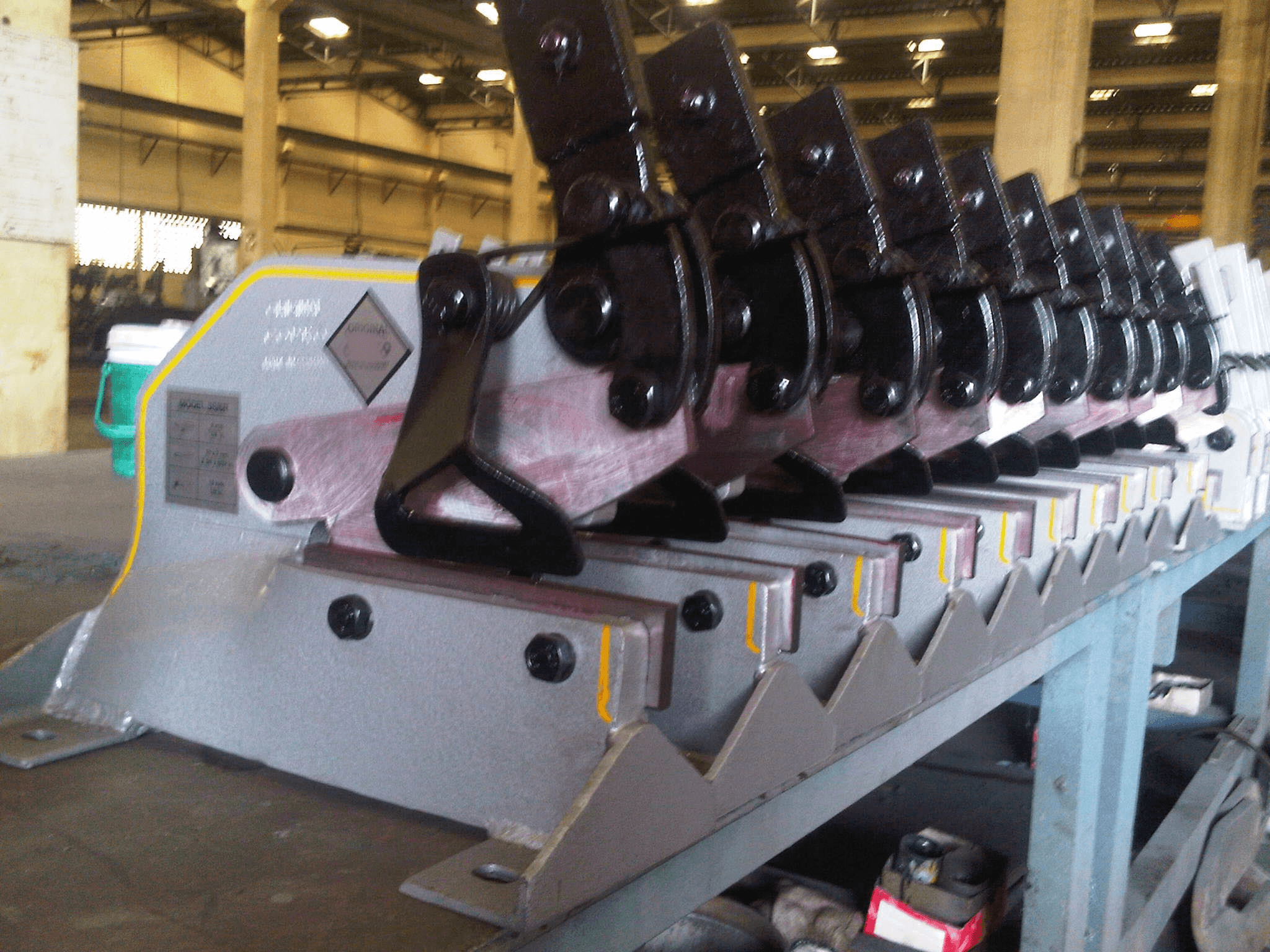
The first step in fabricating a sheet metal component is cutting to size. Shearing machines and shearing machinery perform this function. Shearing machines are multipurpose devices used in the cutting of alloys and other sheet metal. Some shearing machines use a scissor-like, angular shear action to cut metal into sheets or strips. Other, larger machines use a straight shear action with the blade fixed at an angle as opposed to the angular movement. Shearing operations are performed by the action of two blades, one fixed in the shear bed and the other moving vertically with little or no clearance. Shear action moves progressively from one side of the material to the other. The angular configuration of the blades is called the rake. Both rake and clearance are a function of the type and thickness of the material to be cut. In press type shears, the upper blade is inclined in relation to the lower blade, about .5 to 2.5 degrees. The typical shear consists of a fixed bed to which one blade is mounted, a vertically advancing crosshead and a series of hold-down pins or feet that hold the material in place while the cutting occurs. A gauging system with stops is used to produce specific workpiece finish sizes.
Types
There are several types of shearing machines that can be used to meet your specific job needs.
- Air/pneumatic shears use a pneumatic cylinder to power the crosshead and upper blade.
- Hydraulic shears are driven or powered by a hydraulic cylinder. Hydraulic presses can generate extremely high forces to cut metals or other materials.
- Hydro mechanical shears are driven by a hydraulic cylinder or hydraulic motor.
- Mechanical shears have the moving blade driven by a rotary motor through a screw, toggle, lever, or other mechanism.
- Servo driven shears are driven by a direct connection to a servo motor.
- Manual shears are driven or powered by hand or with manual force that is magnified with screw, lever, or other mechanism.
Features
Capacity/operating force is the operating press load required to cut a part during production. The rated capacity of a press is the pressure, in tons, that the slide or ram will safely exert at the bottom of the stroke while working within the range of the press. Stroke is the ram travel from top dead center (TDC) to bottom dead center (BDC). Stroke speed is the linear speed of the slide or ram during pressing or ram advancement steps.
 Specifications
When specifying and purchasing metal shear equipment, an important consideration is the required dimensions needed to fit your range of workpieces.
- Sheet/stock thickness is the sheet or web thickness that can be sheared.
- Sheet/working length is the largest dimension of working distance from right to left that can be cut.
- Throat depth is the distance from the center line of the ram to the back frame in a gap frame, C frame, or similar press type.
Operating a shear requires strict adherence to safety procedures. Machine operators can activate the shear using several methods.
- Manual (foot switch/pendant/pushbutton) action is controlled manually through an operator interface device such as a foot switch, pendant, or push-button controls.
- Automatic/indexing units automatically load parts into the system and operate without operator intervention. The machine changes or adjusts tooling and other parameters, such as speed or applied load, in a pre-programmed manner. Several automation possibilities include
- CNC control or a PLC controller, which are used to program and perform a sequence of operations on the press.
- Windows®/PC control shears are controlled or programmed through a PC interface.
Shearing machines (sheet metal) require periodic maintenance. Shear blade sharpening must be performed on a regular basis so that shears do not yield poor quality cuts. In addition, the proper equipment must be used for shear sharpening. With shear blades, the angle of the cutting edge and the finish of the grind are important factors in determining shear performance and longevity. Often, suppliers of shears and shearing equipment may provide a maintenance schedule and provide replacement parts and sharpening services.
Related Information
CR4 Community—Shearing Machine Procedure
CR4 Community—Sheet Metal Process
Engineering360—Novel Scrubbing System Could Clear Coal Dust from Longwall Mines


Comments
Post a Comment